Youd dominate the ball to conquer the league and you master the low block to capture the world.. That is not a controversial opinion, it is what the data has been saying for three consecutive tournaments, and the teams ignoring it will pay the price in North America.
Why Low Block Defence Defines Tournament Football
The narrative around possession-based football is remarkably persistent. However, the evidence against it at major tournaments is now overwhelming.
At World Cup 2026, this tactical debate matters more than ever. Transition football, high pressing, emotional control and recovery defence dominate World Cup 2026 tactical projections, overtaking pure possession-based models. Furthermore, teams capable of surviving pressure moments and exploiting transitional windows hold the strongest group-stage advantage.
The reason is structural. Tournament football compresses preparation time. Teams face opponents they rarely meet. Scouting reports are thorough and widely shared. In that environment, possession systems — which depend on weeks of rehearsed positional patterns — become fragile. A low block defence, by contrast, requires clarity of shape and collective discipline. Both are easier to maintain across a three-week tournament than intricate positional play.
For World Cup 2026, the tactical lesson is already written. The question is simply which teams have read it.
The Qatar 2022 Blueprint: Possession Teams Eliminated Early
Qatar 2022 provided the clearest evidence yet. The numbers were stark.
All four semi-finalists won their quarter-final matches with less than, or equal to, the possession of their defeated opponents. Both Argentina and France won their semi-finals despite having significantly less possession than their defeated opponents.
The pattern was consistent throughout. Morocco had just 23 percent of the ball against Spain and just 27 percent in their 1-0 quarter-final win against Portugal. Moreover, the irony is that Morocco conceded the only goal against them in the entire tournament in the game where they saw most of the ball. That single data point says everything about low block defence in tournament football.
Spain, meanwhile, dominated possession against Morocco in the round of 16. They created almost nothing. After a goalless 120 minutes dominated in possession by Spain but with few chances created, the match went to a penalty shootout — and Spain failed to convert any of their three attempts. I’ve always thought of Spain as a team throughout the years who held onto the ball be it Fabregas,Xavi, Busquets, or Iniesta. This goes to show you need bold runs and threat in the final third to punish teams.
Germany and Denmark were both at 59.8% possession and suffered group-stage elimination. Meanwhile, of the six teams with possession rates under 38%, four made the knockout rounds. Those numbers do not suggest a coincidence.
While the “Pep Guardiola effect” has made high-possession dominance the gold standard for domestic leagues, these statistics suggest that his tactical DNA is becoming increasingly difficult to replicate on the volatile, one-off stage of international football.
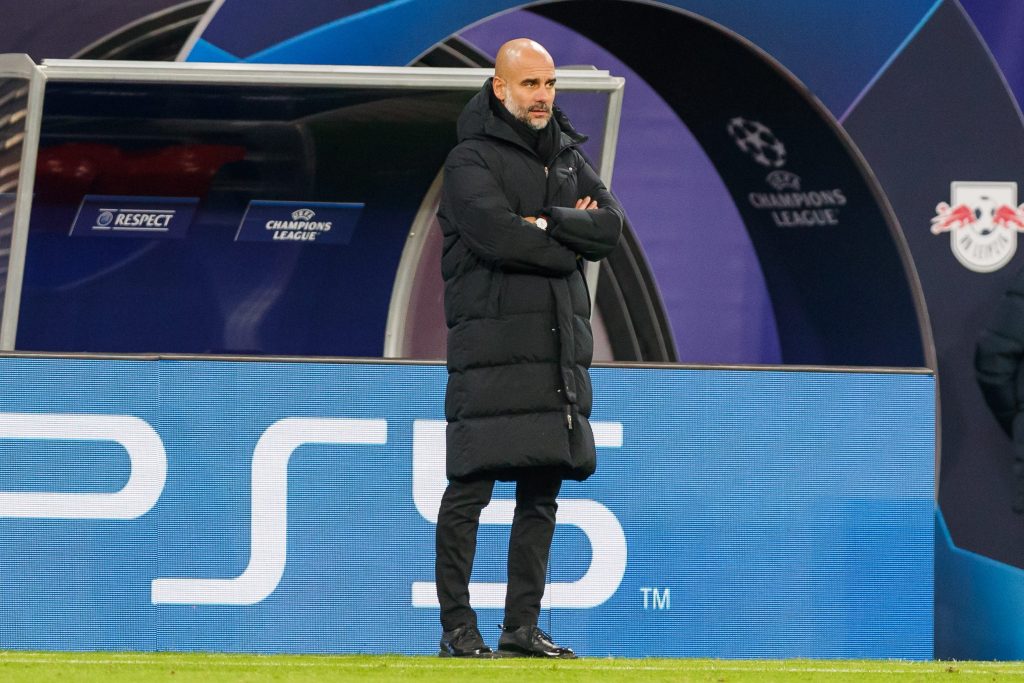
It’s fair to say this evidences a system that is a tectonic shift in the International game, where the aesthetic of control has been traded for the efficiency of the counter-attack. It proves that in the high-stakes vacuum of tournament play, having the ball is so often less vital than what you do when the opponent finally loses it.
The FIFA Technical Study Group confirmed what the results showed. Defending in a mid-block proved to be the popular out-of-possession strategy for teams that made it through to the latter rounds, with all four semi-finalists preferring the mid-block as their dominant phase when without the ball.
Morocco coach Walid Regragui said it plainly. “It’s amazing how journalists love these figures but what’s the point if you have no shots? If we can keep the ball we will, but if they don’t let us so be it.” That is the philosophy of low block defence in tournament football distilled into two sentences.
The teams entering 2026 with that same mindset — Iran, Ecuador, Japan and Morocco again — are all being underpriced. The teams arriving with possession-first identities and no mid-block contingency plan are being overpriced. The market has not caught up with what Qatar told us.
Verdict: Fade the Possession Teams, Back the Pragmatists
Low block defence in tournament football is not a negative tactic. It is a winning one. For World Cup 2026 betting, consider fading Spain and Portugal in tight knockout matches. Instead, back teams with organised defensive structures and transition quality — Morocco, Japan and Ecuador — to outperform their odds. The data is not new. But the market is still not listening.