The most threatening team to play against at the 2026 World Cup may not be the one with the most stars, it’s one that knows exactly what it is. In Iran you have a tactical system is precisely that, and possession-heavy sides with high defensive lines are about to find out why that matters.
Iran’s Tactical System: The Context for World Cup 2026
I’ve found Iran’s low block and transition approach is no accident. Team Melli’s strong defensive play is a style some experts describe as a direct legacy of former coach Carlos Queiroz, who held the role between 2011 and 2019 and whose defensive framework posed challenges to Argentina, Spain and Portugal in previous World Cup campaigns.Amir Ghalenoei has inherited and refined that identity rather than reinventing it, and the results speak clearly.
Iran lost only one of 16 AFC qualifying matches, finished eight points clear of third-placed UAE, and averaged close to two goals per game while conceding at under one per match — ranked 20th in the world by FIFA. That is not a team grinding out results with luck. That is a system functioning at a high level over an extended campaign.
Ghalenoei’s system is built to be hard to break down, with a flexible 4-2-3-1 or 4-3-3 that prioritises defensive organisation and controlled transitions over extended possession. In Group G, facing Belgium’s remaining stars, Egypt’s Mohamed Salah-reliant attack and New Zealand, Iran’s tactical system is not a survival strategy. It is a genuine path to the knockout stage.
Tactical Analysis: Why the Low Block Punishes Possession Teams
Iran’s tactical system exploits a specific vulnerability that possession-heavy sides consistently expose: the space behind a high defensive line when the press is beaten. The mechanism is straightforward. Iran sit compact in two disciplined banks of four. They invite pressure. They absorb it. And then, the moment a passing lane opens in behind, they move with purpose.
The proof exists on the biggest stage. At the 2022 World Cup, Iran’s win over Wales came directly from Welsh sloppiness in possession — a recurring theme of Wales’s performance as they lacked the guile and composure to trouble Iran’s stubborn opponents. Iran’s goals both came from transition moments, not sustained possession play. Roozbeh Cheshmi’s stunning strike in added time was the reward for 90 minutes of disciplined defensive work.
Iran’s attack is built on making the most of transition moments rather than dominating territory. Mehdi Taremi is the focal point. They are aerially strong, technically capable and with the clinical finishing that made him successful at European club football level. Now at Olympiacos, Taremi is Iran’s captain and third all-time scorer with 56 international goals. He does not need a dozen chances. He needs two.
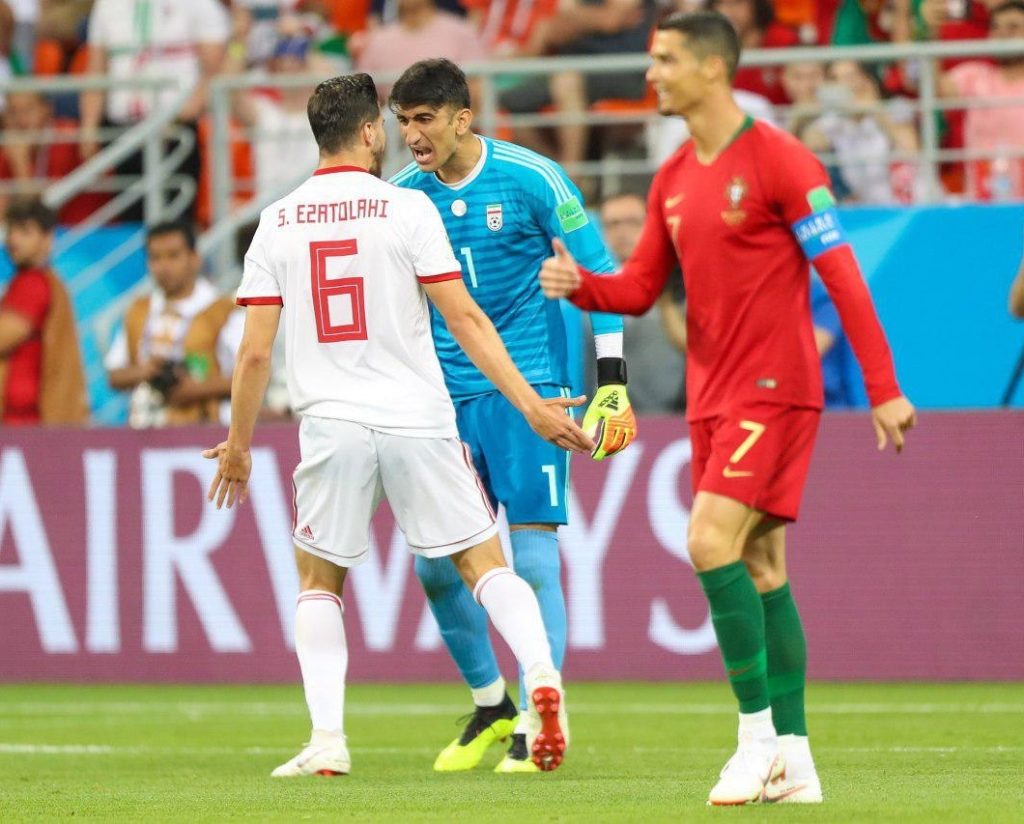
Iran’s midfield maestros Saman Ghoddos and Saeid Ezatollahi serve as the engine of the transition — compact in defence, immediate in attack once possession is won. Ezatollahi’s quality was evident even in the 6-2 defeat to England in 2022,a tough pill to swallow, where he forced a sprawling save from Hennessey with a long-range effort in a match where Iran were tactically outgunned but individually composed.
Majid Hosseini anchors the backline at Kayserispor, showing strong defensive skills with the leadership and discipline the system demands. His ability to read the game and execute timely interventions makes him a vital presence in their defensive structure. This composure under pressure allows him to organise the defence effectively, ensuring the team remains compact even against high-tempo attacks.
The tactical system also creates a specific difficulty for Belgium. A transitioning European side still building its post-Golden Generation identity, Belgium will likely attempt to dominate possession against Iran. Every minute they hold the ball is a minute that Iran’s system is operating exactly as designed — waiting, compressing, and preparing to punish the inevitable loose touch or overhit pass.
Verdict: Iran’s Tactical System Is Worth Backing in the Right Markets
Iran’s tactical system makes them extremely difficult to score against — and capable of winning any match with a single moment of Taremi quality. For betting purposes, Iran to qualify from Group G sits at value odds given how the group sets up tactically. For individual matches, their Under 1.5 Goals lines against Egypt and New Zealand are the plays — and Iran’s low block tactical system means draw no-bet markets against Belgium deserve serious consideration.