Category: Tactical Analysis

  • VAR Impact on Betting Markets: What Changed and What Bookmakers Still Get Wrong

    Fifa World Cup 2026
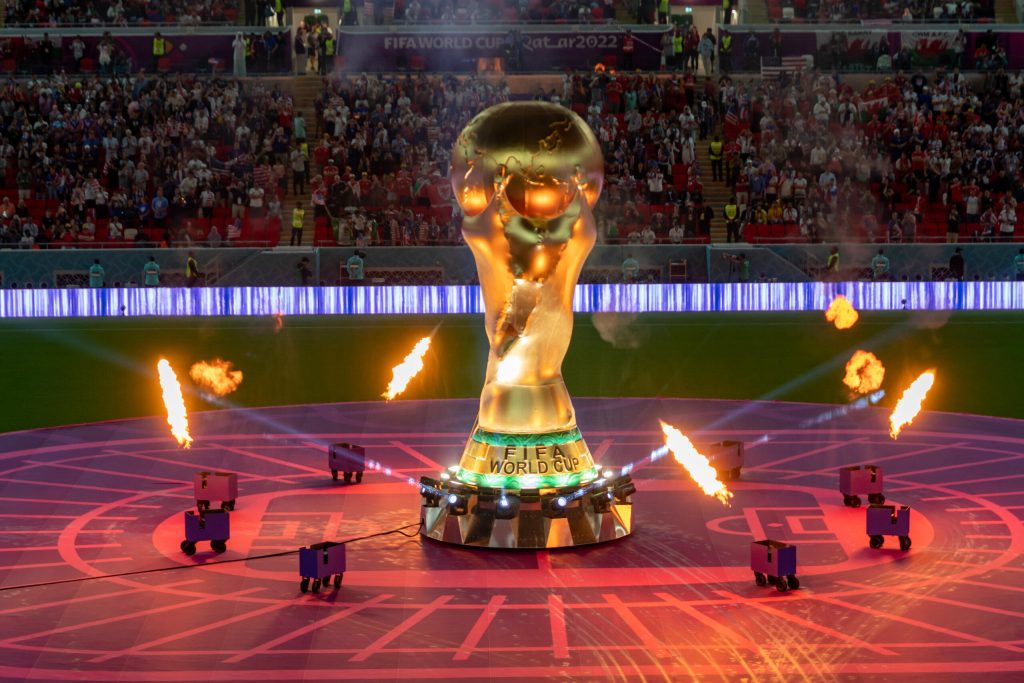
    World Cup Opening Ceremony in Doha, QatarSecretary of State Antony J. Blinken attends the U.S.-Wales Men’s World Cup Match and Opening Ceremony in Doha, Qatar, on November 21, 2022.

    More:

    Original public domain image from Flickr

    VAR did not merely alter the game; it fundamentally dismantled and rebuilt the structure of the betting markets. This is an evolution most bookmakers have yet to accurately reflect in their pricing. The VAR impact on betting markets is arguably the biggest structural shift in football wagering since in-play betting was introduced, and heading into World Cup 2026, the edges it creates are still there for those paying attention.

    Why VAR Impact on Betting Markets Matters at World Cup 2026

    VAR arrived at the World Cup in 2018. The effects were immediate. They were also permanent.

    A record number of penalties were awarded at the 2018 World Cup — 29 in total, a full 11 more than the next highest past tournament. That is not a marginal change. That is a structural transformation of how goals are scored at the biggest tournament in football.

    The betting markets in 2018 were simply not built for that reality. Penalty taker markets were priced with pre-VAR frequency assumptions. First goalscorer odds did not account for the probability of a soft spot-kick early in a match. As a result, bettors who understood the shift made consistent returns in markets that were built on outdated data.

    Heading into World Cup 2026, the VAR impact on betting markets continues to evolve. With more matches and enhanced ball-tracking technology at the 2026 tournament, referees are expected to identify more fouls and handballs, making penalty takers even more important when analysing World Cup odds and potential goalscorer markets. 

    The expanded 48-team format means more group-stage matches and more VAR decisions. The volume of intervention is going up. Not all markets reflect that. As the tournament scale to unprecedented proportions, the sheer frequency of reviews will inevitably create a volatility that traditional models are unprepared to handle. This creates a massive blind spot in live betting, where delay between a foul and a VAR-overturned penalty offers a high stakes window of opportunity for the sharpest observers. Be the one to take these observations and do your own responsible consolidation of views to cash in.

    Tactical Analysis: The Markets That Adjusted — and Those That Didn’t

    Some markets adapted quickly. Others remain mispriced.

    The markets that adjusted:

    Bookmakers now build penalty frequency assumptions into Over/Under totals. The shift is clear. Goals scored from set plays increased from 22 percent in the 2014 World Cup to 39 percent in the 2018 World Cup — an increase directly attributed to VAR awarding more penalties. Over 2.5 goals markets now reflect that reality more accurately than they did in 2018.

    In-play markets also adapted. Bookmakers introduced special markets that consider potential VAR reviews — including odds on whether a goal will be disallowed, whether a penalty review will be successful, or if a red card decision will be overturned. These niche markets now exist precisely because the VAR impact on betting markets demanded them.

    The markets that haven’t adjusted:

    First goalscorer markets remain the most obvious inefficiency. In 2018, Harry Kane scored six goals — 50 percent of which came from the penalty spot. However, his first goalscorer price in each of those matches did not reflect an elevated penalty probability. That gap still exists for designated penalty takers. Specifically, it exists in group-stage matches involving lower-ranked opponents where VAR-induced spot-kicks are most likely.

    Corner kick-related betting is another lagging market. In the VAR era, when close physical contact at set pieces is more likely to be penalised, there is a stronger case for aggressive corner delivery leading to penalty decisions. Yet most corner-related markets are priced on pre-VAR frequency data.

    Finally, anytime goalscorer markets for penalty takers are consistently underpriced in tight, low-scoring matches. In tight, tactical matches where chances are limited, a single VAR decision can change everything — backing a penalty taker gives a built-in safety net. 

    The 2026 tournament also introduces an altitude variable. In cities like Mexico City, thinner air reduces drag on the ball — causing players to overhit penalties if they fail to adjust, potentially producing more missed spot-kicks than in previous tournaments.Additionally, don’t forget the modern day corner theat. That is a wrinkle almost no market has begun to price.

    Verdict: Follow the Penalty Takers, Ignore the Rest

    The VAR impact on betting markets at World Cup 2026 is clearest in one place: back confirmed penalty takers in the anytime goalscorer market at every group-stage fixture. That edge persists because the market prices goals, not mechanisms. For outright tournament bets, prioritise teams with elite, reliable spot-kick takers — Kane, Messi, and Mbappé all fall into that bracket. One VAR decision per game changes everything. Back the players who benefit most when it arrives.
  • Low Block Defence in Tournament Football: Why It Beats Possession at World Cup 2026

    Youd dominate the ball to conquer the league and you master the low block to capture the world.. That is not a controversial opinion, it is what the data has been saying for three consecutive tournaments, and the teams ignoring it will pay the price in North America.

    Why Low Block Defence Defines Tournament Football

    The narrative around possession-based football is remarkably persistent. However, the evidence against it at major tournaments is now overwhelming.

    At World Cup 2026, this tactical debate matters more than ever. Transition football, high pressing, emotional control and recovery defence dominate World Cup 2026 tactical projections, overtaking pure possession-based models. Furthermore, teams capable of surviving pressure moments and exploiting transitional windows hold the strongest group-stage advantage.

    The reason is structural. Tournament football compresses preparation time. Teams face opponents they rarely meet. Scouting reports are thorough and widely shared. In that environment, possession systems — which depend on weeks of rehearsed positional patterns — become fragile. A low block defence, by contrast, requires clarity of shape and collective discipline. Both are easier to maintain across a three-week tournament than intricate positional play.

    For World Cup 2026, the tactical lesson is already written. The question is simply which teams have read it.

    The Qatar 2022 Blueprint: Possession Teams Eliminated Early

    Qatar 2022 provided the clearest evidence yet. The numbers were stark.

    All four semi-finalists won their quarter-final matches with less than, or equal to, the possession of their defeated opponents. Both Argentina and France won their semi-finals despite having significantly less possession than their defeated opponents.

    The pattern was consistent throughout. Morocco had just 23 percent of the ball against Spain and just 27 percent in their 1-0 quarter-final win against Portugal. Moreover, the irony is that Morocco conceded the only goal against them in the entire tournament in the game where they saw most of the ball. That single data point says everything about low block defence in tournament football.

    Spain, meanwhile, dominated possession against Morocco in the round of 16. They created almost nothing. After a goalless 120 minutes dominated in possession by Spain but with few chances created, the match went to a penalty shootout — and Spain failed to convert any of their three attempts. I’ve always thought of Spain as a team throughout the years who held onto the ball be it Fabregas,Xavi, Busquets, or Iniesta. This goes to show you need bold runs and threat in the final third to punish teams.

    Germany and Denmark were both at 59.8% possession and suffered group-stage elimination. Meanwhile, of the six teams with possession rates under 38%, four made the knockout rounds. Those numbers do not suggest a coincidence. 

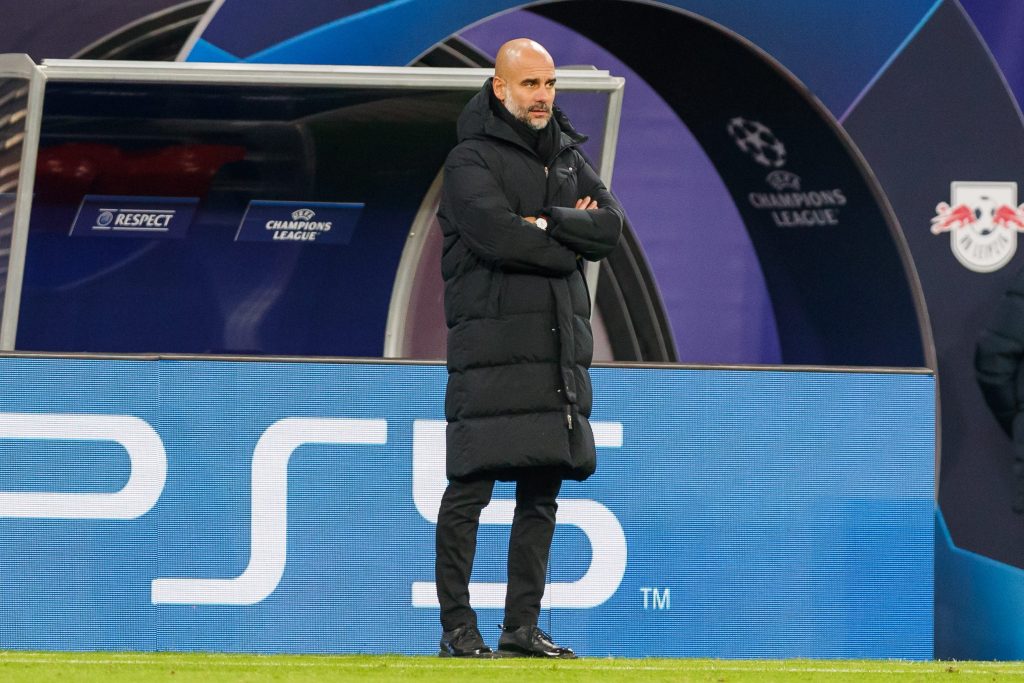
    While the “Pep Guardiola effect” has made high-possession dominance the gold standard for domestic leagues, these statistics suggest that his tactical DNA is becoming increasingly difficult to replicate on the volatile, one-off stage of international football.

    It’s fair to say this evidences a system that is a tectonic shift in the International game, where the aesthetic of control has been traded for the efficiency of the counter-attack. It proves that in the high-stakes vacuum of tournament play, having the ball is so often less vital than what you do when the opponent finally loses it.

    The FIFA Technical Study Group confirmed what the results showed. Defending in a mid-block proved to be the popular out-of-possession strategy for teams that made it through to the latter rounds, with all four semi-finalists preferring the mid-block as their dominant phase when without the ball.

    Morocco coach Walid Regragui said it plainly. “It’s amazing how journalists love these figures but what’s the point if you have no shots? If we can keep the ball we will, but if they don’t let us so be it.” That is the philosophy of low block defence in tournament football distilled into two sentences.

    The teams entering 2026 with that same mindset — Iran, Ecuador, Japan and Morocco again — are all being underpriced. The teams arriving with possession-first identities and no mid-block contingency plan are being overpriced. The market has not caught up with what Qatar told us.

    Verdict: Fade the Possession Teams, Back the Pragmatists

    Low block defence in tournament football is not a negative tactic. It is a winning one. For World Cup 2026 betting, consider fading Spain and Portugal in tight knockout matches. Instead, back teams with organised defensive structures and transition quality — Morocco, Japan and Ecuador — to outperform their odds. The data is not new. But the market is still not listening.

  • Set Piece Goals From Corners: Which Teams Score Most at World Cup 2026 and Why

    Most analysts obsess over squad depth and fluid formations. They are  oblivious to the real hunt happening in the shadows. The most overlooked weapon in modern football is not a star signing or a tactical shift. The weapon is the lethal, calculated chaos of the corner kick. I remember Trent Alexander-Arnolds’ decisive assist in the Champions league semi-final against Barcelona. Behind the scenes, the smartest teams have weaponized the dead-ball, transforming a simple set piece into a cold, systematic route to the back of the net.. Set piece goals from corners are not a bonus for the elite sides at World Cup 2026; for several nations, they are the primary offensive plan.

    Set Piece Goals From Corners: Why This Is the Defining Trend

    The numbers from recent tournaments make the argument before a single word of analysis is needed. At the 2018 World Cup, 42 percent of all goals came from set plays or penalties — the highest proportion ever recorded at that point, beating the previous record of 36 percent from 1998 and smashing the 27 percent recorded in 2014. Five of the eleven goals scored across the quarter-finals came from free kicks or corners.

    England created a tournament-leading 22 goalscoring chances from set pieces through their first five games in Russia and converted them into five goals, tied for the tournament lead with Uruguay. That was not an accident — it was a deliberate, coached strategy that powered a semi-final run.

    The trend has continued: at the 2023 Women’s World Cup, 20 percent of all goals excluding penalties came from attacking corner phases — up from 13 percent in 2019 — with one goal scored for every 21.3 corners taken. As set piece coaching has professionalised across international football, that number will only rise at World Cup 2026. For bettors and analysts alike, ignoring set piece goals from corners is no longer an option.

    Tactical Analysis: The Teams Built to Win from Dead Balls

    The standout set piece story heading into 2026 is Czechia. No European nation converted more set piece situations into goals across the entire 2026 World Cup qualifying campaign — eight in total, excluding penalties. All three of Czech Republic’s goals in regular time across the two playoff knockouts came from dead-ball situations. They are Pavel Sulc’s volley from a corner against Denmark, and Patrik Schick’s penalty and Ladislav Krejcí’s header from a free kick against Ireland. 

    The structural reasons are obvious. Tomas Soucek at 6’4″ is a physically dominant presence in any penalty area, and his career numbers reflect it. Schick provides the creative variation as a second delivery option from wide. The formation — either a 4-2-3-1 or 3-4-2-1 — is built around Soucek as the midfield engine and Schick as the focal point. The corner delivery weapon’s clearly identified. 

    England are the other team whose set piece goals from corners could define their tournament. Tuchel inherited a programme already ahead of the curve on dead balls, and his centre-back options — Marc Guehi, John Stones and Ezri Konsa — all provide aerial threat. Harry Kane’s movement at the near post creates chaos. Declan Rice as the delivery option from the right offers pace and accuracy.

    Research comparing the 2018 and 2022 World Cups found a significant drop in set-piece goals. In 2018, these situations accounted for 38.5% of all goals, but that figure fell to 24.4% in 2022. This shift suggests that defensive organization is evolving rapidly. It is now improving in parallel with more sophisticated attacking strategies.

    The teams who have developed edge in attacking corner routines are finding increasingly organised defences. The arms race is real, and the teams with dedicated set piece specialists — specifically Czech Republic, Germany, England, and Argentina — enter 2026 with a structural advantage.

    Germany under Nagelsmann have also been meticulous. Germany’s assistant coach Mads Buttgereit is a dedicated set piece specialist, and the analytical work around attacking corners has been a genuine focus under Nagelsmann’s tenure. At the Nations League quarter-final against Italy, Germany’s set piece quality was decisive across both legs.

    Verdict: Follow the Corners, Back the Headers

    It’s safe to say set piece goals from corners are not random, they are a measurable, coachable, repeatable system. At World Cup 2026, back Czechia to score from a corner in every match they play at generous odds. For outright bets, England’s set piece threat is an underappreciated reason why they can go deep in the knockouts. First goalscorer markets for Soucek, Guehi and Krejcí from corners offer consistent value across the group stage.

  • Iran’s Tactical System: Why Low Block and Transition Beats Possession Teams at World Cup 2026

    The most threatening team to play against at the 2026 World Cup may not be the one with the most stars, it’s one that knows exactly what it is. In Iran you have a tactical system is precisely that, and possession-heavy sides with high defensive lines are about to find out why that matters.

    Iran’s Tactical System: The Context for World Cup 2026

    I’ve found Iran’s low block and transition approach is no accident. Team Melli’s strong defensive play is a style some experts describe as a direct legacy of former coach Carlos Queiroz, who held the role between 2011 and 2019 and whose defensive framework posed challenges to Argentina, Spain and Portugal in previous World Cup campaigns.Amir Ghalenoei has inherited and refined that identity rather than reinventing it, and the results speak clearly.

    Iran lost only one of 16 AFC qualifying matches, finished eight points clear of third-placed UAE, and averaged close to two goals per game while conceding at under one per match — ranked 20th in the world by FIFA. That is not a team grinding out results with luck. That is a system functioning at a high level over an extended campaign.

    Ghalenoei’s system is built to be hard to break down, with a flexible 4-2-3-1 or 4-3-3 that prioritises defensive organisation and controlled transitions over extended possession. In Group G, facing Belgium’s remaining stars, Egypt’s Mohamed Salah-reliant attack and New Zealand, Iran’s tactical system is not a survival strategy. It is a genuine path to the knockout stage.

    Tactical Analysis: Why the Low Block Punishes Possession Teams

    Iran’s tactical system exploits a specific vulnerability that possession-heavy sides consistently expose: the space behind a high defensive line when the press is beaten. The mechanism is straightforward. Iran sit compact in two disciplined banks of four. They invite pressure. They absorb it. And then, the moment a passing lane opens in behind, they move with purpose.

    The proof exists on the biggest stage. At the 2022 World Cup, Iran’s win over Wales came directly from Welsh sloppiness in possession — a recurring theme of Wales’s performance as they lacked the guile and composure to trouble Iran’s stubborn opponents. Iran’s goals both came from transition moments, not sustained possession play. Roozbeh Cheshmi’s stunning strike in added time was the reward for 90 minutes of disciplined defensive work.

    Iran’s attack is built on making the most of transition moments rather than dominating territory. Mehdi Taremi is the focal point. They are aerially strong, technically capable and with the clinical finishing that made him successful at European club football level. Now at Olympiacos, Taremi is Iran’s captain and third all-time scorer with 56 international goals.  He does not need a dozen chances. He needs two.

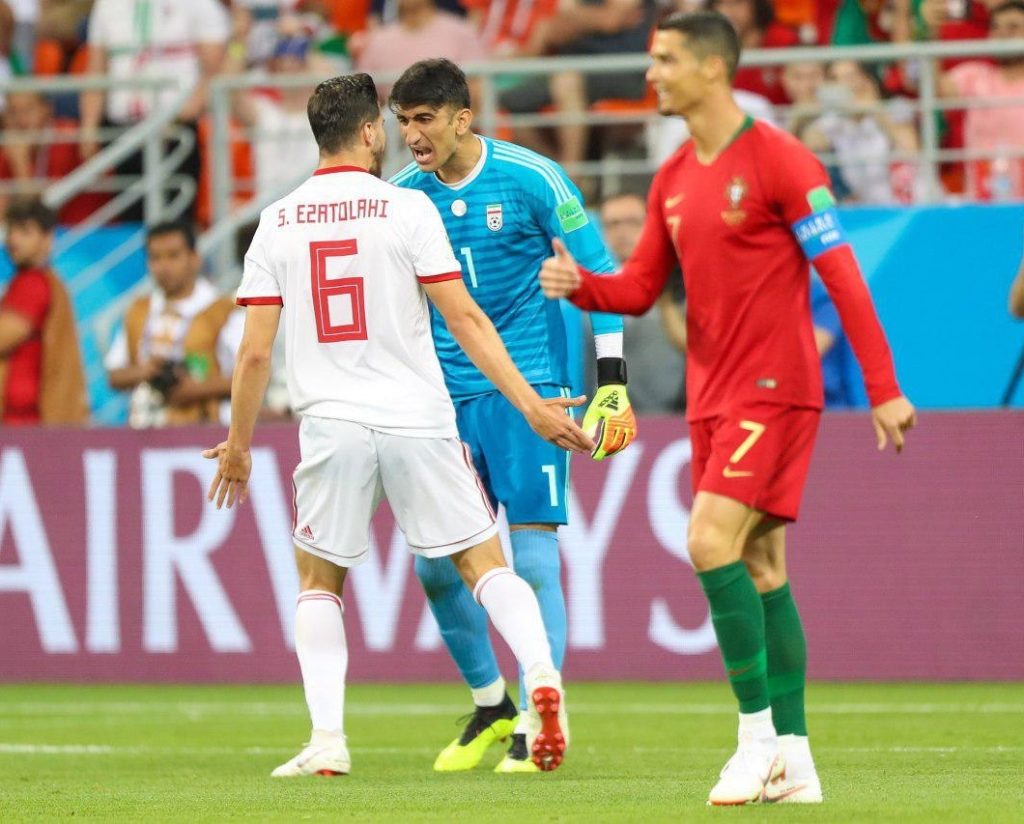
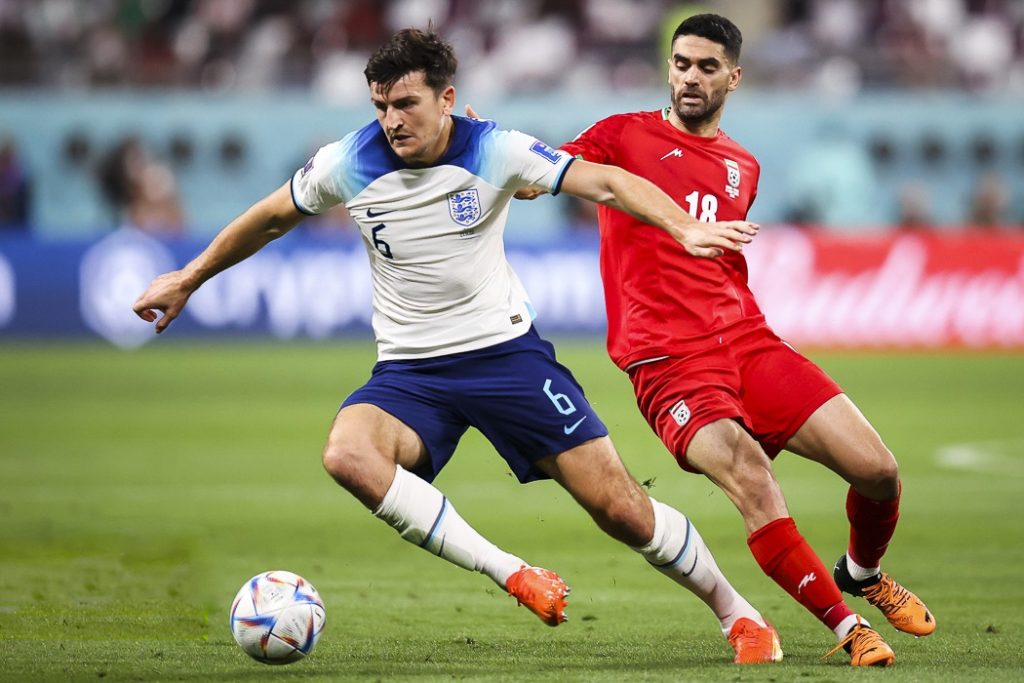
    Iran’s midfield maestros Saman Ghoddos and Saeid Ezatollahi serve as the engine of the transition — compact in defence, immediate in attack once possession is won. Ezatollahi’s quality was evident even in the 6-2 defeat to England in 2022,a tough pill to swallow, where he forced a sprawling save from Hennessey with a long-range effort  in a match where Iran were tactically outgunned but individually composed. 

    Iran and Portugal at 2018 World cup
    Iran and Portugal at 2018 World cup

    Majid Hosseini anchors the backline at Kayserispor, showing strong defensive skills with the leadership and discipline the system demands. His ability to read the game and execute timely interventions makes him a vital presence in their defensive structure. This composure under pressure allows him to organise the defence effectively, ensuring the team remains compact even against high-tempo attacks.

    The tactical system also creates a specific difficulty for Belgium. A transitioning European side still building its post-Golden Generation identity, Belgium will likely attempt to dominate possession against Iran. Every minute they hold the ball is a minute that Iran’s system is operating exactly as designed — waiting, compressing, and preparing to punish the inevitable loose touch or overhit pass.

    Verdict: Iran’s Tactical System Is Worth Backing in the Right Markets

    Iran’s tactical system makes them extremely difficult to score against — and capable of winning any match with a single moment of Taremi quality. For betting purposes, Iran to qualify from Group G sits at value odds given how the group sets up tactically. For individual matches, their Under 1.5 Goals lines against Egypt and New Zealand are the plays — and Iran’s low block tactical system means draw no-bet markets against Belgium deserve serious consideration.

  • World Cup 2026 Goalkeepers: Five Teams Whose Tournament Run Hinges on Their Keeper

    Goalkeepers are often underestimated but when it comes to world football and a 48 team tournament in particular, you’d be a fool to do so and World Cup 2026 will prove it emphatically. Five of the strongest title contenders head to North America with goalkeeping situations so pivotal that a single inspired performance — or a single catastrophic error — could render everything else irrelevant.

    World Cup 2026 Goalkeepers: Why This Matters More Than Ever

    Tournament football distills a goalkeeper’s importance to its rawest form. Over 90 minutes in a knockout match, a world-class keeper can be the difference between a semi-final and a flight home. The expanded 48-team format at World Cup 2026 means more games, more pressure moments, and more opportunities for the goalkeeper question to become the defining question.

    The Golden Glove race heading into 2026 is led by Alisson Becker at approximately +600, with Emiliano Martínez second and Thibaut Courtois third — all three representing teams with genuine trophy ambitions. But it’s not just the favourites whose tournaments hinge on their keeper. The five teams below each carry specific goalkeeping storylines that will define how far they go.

    Five Teams, Five Goalkeeper Questions

    Argentina — Emiliano Martínez: Pressure-Proof or Polarising?

    Martínez has described himself as “obsessed with improving” and says he feels better at 33 than at 23 — both physically and mentally.That confidence is earned. He has saved crucial penalties to help Argentina secure both World Cup and Copa América glory in 2022 and 2024 respectively,and his psychological presence in shootouts is genuinely frightening for opposition penalty takers. Yet some analysts now consider him overrated — good, but elevated by tournament moments rather than consistent elite-level shot-stopping week to week.If Argentina reach the knockouts and face a penalty shootout, Martínez is a weapon. If they face a team that simply outplays them in open play, the question of his distribution and positioning becomes live again.

    Italy — Donnarumma: The Best Pure Shot-Stopper in the Tournament

    When it comes to pure ability to cover the goal and make reflex saves, Donnarumma is one of the two best in the world. Now at Manchester City, his record in shootouts is extraordinary — he has won six out of the seven penalty shootouts he has participated in domestically and internationally, including his famous double save in Euro 2020’s final against England at Wembley. The weakness — he is less reliable as a passer than elite modern goalkeepers, and City have had to adapt their system around his limitations on the ball. Against teams that press Italy’s build-up, this becomes a live tactical vulnerability.

    Brazil — Alisson: The One Question Ancelotti Can’t Fully Answer

    Alisson secured third in The Athletic’s 2026 goalkeeper rankings — with the caveat that without his injury issues this season, he would have a strong case for being number one.That is the problem in three words: injury issues. Alisson is expected to start for Brazil, with Ederson — now at Fenerbahçe — as the backup.Both are world-class, which is a luxury most nations can only dream about. But Brazil’s tournament ceiling depends heavily on Alisson arriving fit and finding his best level after a disrupted club season.

    England — Pickford: Underrated or Correctly Rated?

    Jordan Pickford has been a consistent performer for almost eight years as England‘s number one — solid on the ball, with top reflexes — but arguably goes under the radar when it comes to being labelled world-class.Dean Henderson has continued to impress at Crystal Palace, giving Tuchel a genuine selection dilemma, though Pickford’s experience in high-stakes England knockout matches gives him the edge in all but current form. For an England team that may need penalty heroics to win a tournament, this choice carries enormous weight.

    France — Maignan: The Quiet Favourite

    At 30 during the tournament, Maignan will be in his prime — and his shot-stopping, command of his area and distribution make him a complete modern goalkeeper. France’s defensive organisation under Deschamps typically results in plenty of clean sheets. Maignan has recovered top form in 2026 despite injury setbacks, and his outstanding performance at Euro 2024 — conceding just three goals in six games — confirmed his standing as France’s best post-Lloris. He may be the most complete World Cup 2026 goalkeeper in the field.

    Verdict: Back Maignan for the Golden Glove

    Of the five World Cup 2026 goalkeepers covered here, Maignan offers the strongest combination of form, system and tournament depth. At +1000 for the Golden Glove, he offers genuine value for bettors backing France to go deep. For outright tournament bets, track the fitness of Alisson and Martínez between now and June — both have injury question marks that could materially shift their respective team’s odds overnight. Let me know on socials @thefixturehq which goalkeeper you’re tipping for success.

  • Argentina’s World Cup 2026 Title Defence — What History Says About Back-to-Back Winners

    Argentina’s World Cup 2026 title defence is the most persuasive storyline heading into North America. It also happens to be the most statistically threatening. The cold truth is that the history of back-to-back World Cup winners is not a cautionary tale — it is very nearly a blank page.

    Argentina’s World Cup 2026 Title Defence: The Historical Context

    Only two teams have ever won consecutive World Cups: Italy in 1934 and 1938, and Brazil in 1958 and 1962. That is two successes from 21 opportunities across the modern tournament era. Every other reigning champion — including France, Germany, Spain, and Brazil on multiple other occasions — has failed to retain. France failed to score a single goal at the 2002 World Cup. Italy finished bottom of their group in 2010. Spain were eliminated at the group stage in 2014. Germany went out in the group stage in 2018. 

    The pattern is overwhelming. Defending champions arrive with targets on their backs, tactical blueprints distributed across every coaching room on earth, and squads that are inevitably four years older. The hunger that produced the original triumph is hard to manufacture twice in a row.

    Argentina comfortably topped the CONMEBOL qualifiers for 2026, beating arch-rivals Brazil both home and away.They arrive in Group J facing Algeria, Austria and Jordan. Jordan as of 1st April 2026 rank 63rd in FiIFA rankings, a middle Eastern team with not quite the outfit of that of Iran. This is notably a path that demands nothing and offers everything. On paper, Scaloni’s side should cruise through the group stage. The question has never been about the group stage.

    Tactical Analysis: What Argentina Have — and What They’re Missing

    Argentina’s projected starting XI builds around Emiliano Martínez in goal, a back four of Molina, Romero, Lisandro Martínez and Tagliafico, a midfield of De Paul, Mac Allister and Enzo Fernández, with Messi, Lautaro Martínez and Julián Álvarez in attack. 

    That is, by any measure, a frightening team. Cristian Romero at centre-back is among one of the top 10 centre-backs globally despite playing for a relegation battle fighting team in Tottenham. Alexis Mac Allister has developed into one of the most complete midfielders in European football since his Qatar heroics. Julián Álvarez at Manchester City is a player who wins games through sheer movement and intelligence.

    Emiliano Martínez’s presence between the sticks has been vital in Argentina’s title-winning campaigns, particularly in penalty shootouts. In a knockout tournament, that matters as much as anything that happens in open play.

    The complexity is Messi. Scaloni has insisted that Messi has “earned the right” to have the final say over his own involvement— which is a generous policy that also introduces genuine uncertainty into Argentina’s planning. The 38-year-old made a promising start to the 2026 season with Inter Miami and featured in both March friendlies, scoring in the 5-0 win over Zambia. He is still capable of the decisive moment. The question is how many of those moments his body can provide across a seven-game tournament in June and July heat. I’m personally suprised Messi didn’t bow out after winning the 2022 world cup and it looks he could still play a prominent part in this tournament

    Tournament History: What it tells us for Argentina

    Only Italy in the 1930s and Brazil in the 1960s have defended the World Cup crown.Both did so in eras where the tournament was structurally and competitively unrecognisable from today’s version. Italy’s back-to-back was achieved in a 16-team knockout competition with no group stage. Brazil’s 1962 defence was completed without Pelé, who was injured in the second match. Neither precedent maps cleanly onto Argentina’s challenge in a 48-team tournament where elite teams lurk from the round of 32 onwards.

    The repeated failures of defending champions are rooted in overconfidence, tactical over-familiarity and the difficulty of replicating the hunger that produced the original win. Scaloni is smart enough to know this. Whether his players are emotionally equipped to absorb it is a different question.

    Verdict: Respect the History, Fade the Price

    Argentina are one of those teams on paper I expect to go far. Experienced, balanced talent in all areas, relatively accustomed to the time zone and culture of the Americas. Argentina are one of the most successful nations in the tournament’s history.

    Argentina’s World Cup 2026 title defence is being priced as if history doesn’t exist. At odds of around +800, Argentina sit fourth in the betting market. That is not a price that adequately reflects the statistical weight of the defending champion curse, a 38-year-old Messi operating on managed minutes, or a bracket that will put them against a European or South American heavyweight from the quarterfinals onwards. Back them to top Group J easily. As outright tournament winners, though, the price is too short. Fade Argentina to lift the trophy — and look instead at France or England at longer odds to end the pattern.

  • Jude Bellingham’s Positional Evolution — Why He’s Still England’s Most Important Player at World Cup 2026

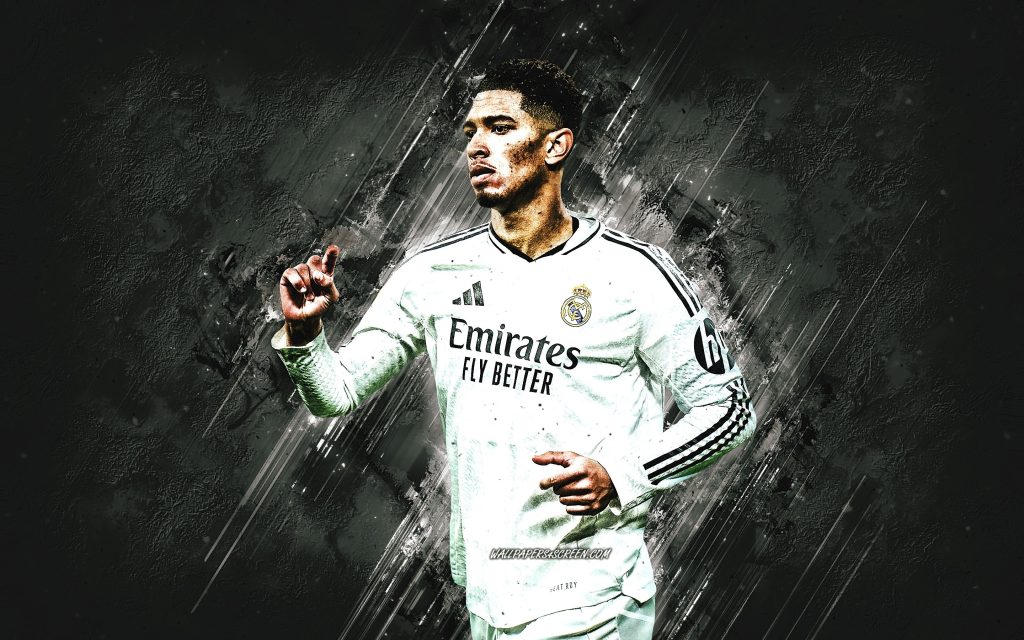
    People believing Jude Bellingham will be a problem for England’s  2026 World Cup campaign have fundamentally confused turbulence with decline. The most complete midfielder of his generation has spent three years at Real Madrid learning to function in roles most players never master across an entire career. That is exactly the type of education that will define England’s summer.

    Jude Bellingham’s Positional Evolution: Why It Matters in 2026

    Bellingham’s positional evolution is the central tactical story of England’s tournament preparation, and it remains underappreciated. The debate around his place in Tuchel’s squad has focused almost entirely on attitude and selection politics — Tuchel’s comments about Bellingham’s “impulsiveness,” his omission from the October squad despite returning from shoulder surgery, and the internal suggestion that team cohesion concerns informed the decision (beIN SPORTS) — while the actual football case for his inclusion has been largely drowned out.

    Tuchel sees Bellingham as a No.10, and he is a world-class player who featured prominently for England in the last two major tournaments.ESPN note that matters more than any diplomatic friction. Morgan Rogers himself has been emphatic: Bellingham is crucial for England in 2026 — someone with a passion, drive and desire to win that is exactly why he’s performing at the level he is.

    Gmx cite when the man competing with him for minutes is defending the case for Bellingham’s inclusion, the noise around his character starts to look like exactly that — noise.

    Tactical Analysis: Three Roles, One Player

    Jude Bellingham’s positional evolution is genuinely unlike anything else in world football at his age. He arrived at Real Madrid in the summer of 2023 already a fully formed box-to-box midfielder — destructive, progressive, physically imposing. What happened next accelerated his development by a decade.

    In his debut season at the Bernabéu, operating as a false nine behind Vinicius Junior and Rodrygo in the absence of a recognised striker, Bellingham tallied 23 goals and 13 assists — helping Real Madrid claim La Liga, the Champions League and the Spanish Super Cup, while finishing third in the Ballon d’Or voting. Sports Illustrated That is not a midfielder having a good season. That is a player redefining what the position means.

    His role changed dramatically upon the arrival of Mbappé in 2024-25. Suddenly in 52 appearances, Bellingham managed 14 goals and 13 assists — but what people often fail to realise is that he was having to primarily defend in half of his appearances to keep Real Madrid’s beaten backline from conceding five goals a game. Sports Illustrated The output dropped. The education didn’t.

    Bellingham has explained this himself: “In my first season here I lived very close to the rival box and scored quite a few goals, but after the arrival of Mbappé, we have a natural striker who handles that role.”.

    That is a 22-year-old absorbing positional sacrifice at the world’s biggest club without complaint, and filing it all away. For England, he operates in neither the false nine nor the deep midfield role he occupied at Madrid — Tuchel has been explicit: “Jude comes in as a No.10 because that’s his best position. He has an extraordinary quality — he gets into the box and scores goals. We’ll find the space for him to do that freely.” beinsports

    In England’s system, Bellingham’s positional evolution gives Tuchel something irreplaceable: a player who understands defensive duties from a forward position, knows how to arrive late into the box from deep, and can operate as both the creative engine and the goal threat from the same role. Declan Rice provides the defensive platform. Bukayo Saka provides the width. Bellingham is the connector — and no one else in this squad can do what he does.

    Verdict: Start Him, Trust Him, Back Him

    I believe Jude Bellingham’s World Cup 2026 tournament hinges entirely on fitness and continuity of selection in May. If he arrives in North America sharp and settled, England have a player capable of winning individual matches through sheer positional intelligence and technical quality. Back England to reach the semi-finals — and back Bellingham for a Top Tournament Performer award at any price above 10/1. His positional evolution has made him exactly the kind of player tournaments are decided by.

  • Why 3-at-the-Back Fails Against High Pressing — Nations League Lessons for World Cup 2026

    The 3-at-the-back formation is currently the most over-reliant system in international football, and the Nations League has just completed a whole campaign subtly demonstrating this.. Any team arriving at World Cup 2026 with a rigid back three and an underprepared press response is handing their opponents a tactical blueprint for early goals.

    3-at-the-Back and High Pressing: Why This Matters in 2026

    The 3-at-the-back formation surged back into fashion across European football following its success at club level — Atalanta, Inter Milan, Bayer Leverkusen and Manchester United under Ruben Amorim have all demonstrated its ability to overload central areas and provide platform for dangerous wing-backs. National team coaches watched and followed suit.

    Two clear formation trends emerged from Euro 2024: teams deploying clearly defined attacking and defensive shapes, with most sides adopting fluid 3-2-2-3 structures in possession, and the 3-4-2-1 being deployed by teams like Denmark and Switzerland to create central overloads and viable passing lanes through the middle of the field. Total Football Analysis

    The problem is that international football operates on compressed preparation time, collective fatigue, and opponent scouting that club managers can only dream about. A 3-at-the-back system that functions beautifully across a 38-game season, with daily training sessions and embedded automatisms, becomes something considerably more fragile in a tournament environment — particularly when the opposition has identified exactly where to apply a high press. The Nations League showed us precisely how fragile.

    Tactical Analysis: Italy’s Back Three and Germany’s Blueprint

    The most instructive lesson came from the Nations League quarter-final between Italy and Germany. Luciano Spalletti deployed Italy’s typical 3-5-2 formation with Donnarumma in goal, Di Lorenzo, Bastoni and Calafiori as centre-backs, and Udogie and Politano as wing-backs. Interestingly Italy haven’t made it to this world cup, nor any world cup since 2014.

    Total Football Analysis Against a settled club side, that spine — packed with Champions League-level talent — looks commanding. Against Germany’s 4-2-3-1 with Musiala operating as an advanced playmaker behind Burkardt, and Sané and Amiri wide Total Football Analysis — it developed a specific and exploitable vulnerability.

    The structural problem with 3-at-the-back against a high press is geometric. When the ball is with the central defenders and a high press is triggered, the wing-backs are the primary escape routes — but they sit high and wide, often leaving the three centre-backs in a 3v2 or 3v3 situation if one steps forward to receive. 

    Germany had pace in abundance wide through Sané and Leweling, both of whom provided a significant test for Italy’s wing-backs, with Italy needing to be wary of Germany’s counter-attacking threat whenever they ventured forwards. Football Italia

    I believe that tension between holding defensive shape and enabling wing-backs to function as both outlet and wide defender — is the fundamental contradiction at the heart of the system under press conditions. When it breaks down, it breaks down quickly. Germany became the first Die Mannschaft manager since Franz Beckenbauer to win on Italian soilOneFootball across those two legs, eliminating Spalletti’s side on aggregate in a tie that exposed Italy’s structural vulnerability repeatedly.

    Switzerland, by contrast, showed how to neutralise this problem at Euro 2024 when beating Italy 2-0 — specifically through Granit Xhaka and Remo Freuler intelligently sitting in front of Switzerland’s central defenders to prevent Italy pressurising their own back line in the first phase of the press.The lesson is not that 3-at-the-back fails universally. It’s that it fails when the midfield screen doesn’t function and the wing-backs are exposed in transition.

    For World Cup 2026, the teams most at risk are those deploying a back three with wing-backs who are primarily offensive profiles — Morocco, Italy, and several South American sides who have adopted the system without the defensive pressing structures to support it. The teams most equipped to exploit it are those with high-energy wide forwards who can pin wing-backs and trigger turnovers in dangerous zones: Japan, Germany, and the United States under Pochettino all fit that profile.

    Verdict: Fade the Pretty Back Threes, Back the Press

    When a 3-at-the-back team faces a high-pressing opponent at World Cup 2026, back Over 2.5 Goals. Across Italy and Germany’s combined twelve Nations League matches in 2024-25, nine out of twelve featured three or more goals, with an average of 3.58 goals per game. GiveMeSport That number reflects exactly what happens when an attacking press meets an overloaded back three with wing-backs caught in transition. The pattern is consistent. The value is there. And it will happen again in North America.

  • England World Cup 2026 Squad: The Three Decisions That Will Define Their Tournament

    England arrive at the 2026 World Cup with talent in abundance as well as their most consequential selection headaches in a very long time — and those two things are entirely connected.

    Thomas Tuchel has an embarrassment of creative riches and a genuine dilemma at almost every position behind Harry Kane, which means the England World Cup 2026 squad announcement on June 1st will be as debated as any in recent history.

    England World Cup 2026 Context: The Right Coach, the Wrong Certainties

    England were the first UEFA nation to book their ticket to the tournament. Tuchel’s side head to North America with a big question mark hanging over the squad despite an enviable talent pool.Sports Mole say that tension — clear quality, unclear combinations — is the defining tension of this England cycle.

    England have been drawn in Group L alongside Croatia, Ghana and Panama, with group matches taking place in Texas, Boston and New Jersey. ESPN note that on paper, that is a path that should yield nine points. In practice, England have a history of making the navigable look treacherous, and Tuchel’s squad choices will either give the team clarity or compound the same over-talented, under-defined problem that cost Southgate at two Euros finals and a World Cup semi-final.

    Tuchel has been explicit that selection will depend on more than talent. “It will be very important that we don’t select just for talent. Tuchel should select for what we need from a player — what the social skills are, is he a good team-mate, can he support if his role is maybe the supporting role,”he said. Three decisions above all others will test whether those words translate into action.

    The Three Decisions

    Decision One: Does Bellingham start as the No.10?

    At the start of the year, fans would have placed bets on Bellingham starting as England’s number 10 throughout the tournament. But Tuchel raised eyebrows when he omitted the Real Madrid star from his October squad, allowing Morgan Rogers and Eberechi Eze the opportunity to impress. England scored eight goals across those two fixtures.

     sportsmole claim the argument for Bellingham is obvious: elite player, big-game temperament, Champions League pedigree. The argument against is equally real: when he’s not at his best, he lost the ball 14 times against Albania and his reaction to being substituted prompted a firm response from Tuchel. Tuchel values chemistry over ego. That is not a small thing.

    Decision Two: Who backs up Harry Kane?

    Tuchel compared Kane to Messi and Ronaldo in terms of irreplaceable influence on this England team — and went into the Japan friendly without a recognised striker, suggesting he is not thrilled with the alternatives. Goal.com Ollie Watkins has scored just one Premier League goal this season. Dominic Solanke has been plagued by ankle injuries. Ivan Toney hasn’t been called up since the friendly loss to Senegal. sportsmole have claimed this is not a luxury problem. If Kane picks up a knock in the group stage, England’s entire tactical structure collapses without a credible replacement.

    Decision Three: Palmer — in or out?

    Cole Palmer has played just 65 minutes from a possible 540 across Tuchel’s games in charge largely due to injury, and his form at Chelsea has waned. Goal.com suggests he remains the most naturally gifted No.10 in England’s pool — the kind of player who wins knockout games with a single moment of invention. In all likelihood he will still make the 26 due to dropouts, but he’s at risk of spending June and July at home. Goal.com notes Tuchel leaving him out entirely would be a significant statement about his vision for the team. We can’t forget Palmer coming on from the bench in the Euro’s final against Spain with invigorating energy and putting the score level.

    Verdict: England Will Win Their Group — but the Real Test Comes After

    My verdict is that England World Cup 2026 is a genuine semi-final or better, assuming the squad decisions land well. The group is winnable at a canter. The problem is what comes next, which depends entirely on whether Tuchel gets these three calls right. Back England to top Group L at short odds.

    For value, their route to the semi-final at 7/2 or better is worth a look — because the bracket opens up considerably if they avoid Brazil before the last eight.

  • Brazil World Cup 2026 Odds: Why the Market Has Got Them Wrong

    It seems that backing Brazil feels untrendy right now, and that’s often the moment you should. The market has spent two years punishing them for their Qatar exit and Copa América pain, and in doing so has handed us a price on the world’s most talented squad that a calmer reading of the evidence simply doesn’t support.

    Brazil World Cup 2026 Context: The Ancelotti Reset Is Real

    Brazil has not won the World Cup since 2002 meaning a 24-year drought that has generated enough hand-wringing analysis to fill several libraries. The exits hurt. The Copa América quarterfinal loss to Uruguay on penalties in 2024 was particularly damaging, arriving after a scoreless draw in which Brazil created little and lost their tactical discipline completely. The federation had seen enough and moved decisively.

    Carlo Ancelotti arrived from Real Madrid carrying five Champions League medals and a specific skill set that Brazil have needed for years: the ability to build a winning culture inside a squad full of stars who are used to being the main man. Under Ancelotti, Brazil has started prioritising merit over reputation — fitness, form and tactical fit now dictate squad selection, even if it means leaving out big names temporarily. Tribuna.com

    Brazil are currently marked at 8/1 with Bet365, sitting fourth in the betting behind France, Spain and England. Squawka For a squad of this quality, playing in an expanded 48-team tournament with a genuinely favourable group draw, that is a number that deserves serious attention.

    Brazil World Cup 2026 Tactical Analysis: Defence First, Samba Second

    The most significant thing Ancelotti has done is change the philosophy before changing the personnel. “The World Cup is won by whoever concedes the least, not whoever scores the most,” Ancelotti said plainly. Gulf News That is not what Brazilian football traditionally sounds like, and that is precisely why it matters. Previous coaches have prioritised attacking expression at the expense of shape. Ancelotti has done the opposite.

    This version of Brazil is more structured and more defensively organised than recent cycles, while Vinicius Junior and Raphinha still offer elite attacking quality on both wings. RotoWire In March 2026, Brazil beat Senegal 2-0 and drew 1-1 with Tunisia, with Ancelotti experimenting with a 4-4-2 and a 4-2-3-1 across the two games. Squawka

    The spine is exceptional. Alisson in goal remains among the two or three best goalkeepers on the planet. Marquinhos and Bremer both play for European heavyweights, while Casemiro and Andrey Santos provide Premier League-calibre ball-winning in midfield. Behind a front line of Vinicius Junior and Raphinha — who Ancelotti has described as capable of being among the best players in the world at the tournament Gulf News — that defensive foundation converts into wins, not near misses.

    Brazil’s attacking depth includes multiple candidates for the Golden Boot, and the team is at its best when it can pin opposing full-backs and create diagonal runs into the box. RotoWire The striker role remains the one genuinely open question, with Igor Thiago and Joao Pedro competing for a starting berth. Squawka Ancelotti will solve it. He always does.

    Brazil have been drawn in Group C alongside Morocco, Scotland and Haiti RotoWire — a path that asks almost nothing of them in the group stage and leaves them fresh for the rounds that matter. Vinicius Junior, a man unfortunate to miss out on the 2024 Ballon d’or, will be in fine stead for this tournament under Ancelotti.

    Verdict: The Seleção Are a Value Bet at Current Prices

    At 8/1, Brazil World Cup 2026 odds represent mispricing driven by recency bias and tournament trauma rather than a clear-eyed look at what Ancelotti has built. The defensive identity is new and real. 

    The attacking firepower remains the best in the tournament outside of France. The group draw is straightforward. Take the 8/1 now — because if Vinicius stays fit and Ancelotti has three months to embed his system, this number will look generous before the quarter-finals arrive.