Iran could very well be the unspoken surprise particularly to those who don’t know too much about them. The Iran World Cup 2026 squad carries a defensive structure that, on current form, is better organised than at least a dozen teams who will receive far more column inches between now and June.
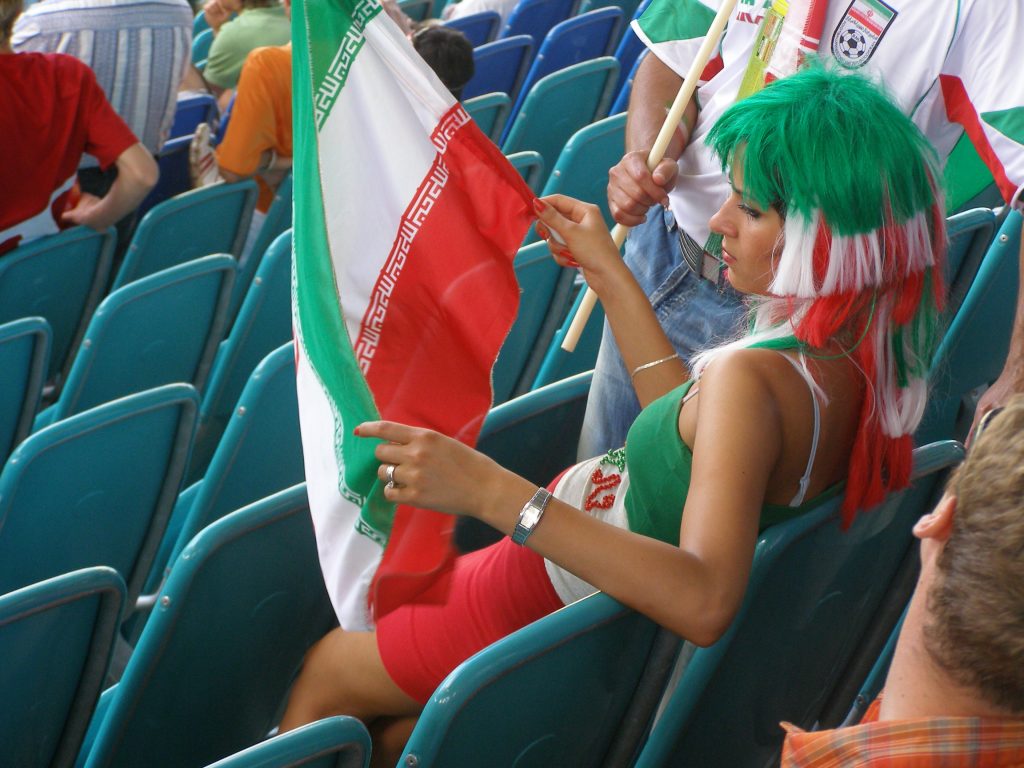
Iran World Cup 2026 Context: A Seventh Appearance, Zero Respect
Iran has qualified for four consecutive World Cups and seven overall, but Team Melli has never advanced out of the group stage. That record becomes the lazy shorthand for every preview dismissing them as makeweights. It shouldn’t. The fact that they have consistently qualified while failing to progress tells you something more interesting than failure — it tells you they have the structure to get there, but have historically been undone by a lack of attacking quality in the moments that decide group stages. That calculus is changing.
Iran lost only one of their 16 AFC qualifying matches, finished eight points clear of third-placed UAE in their group, and averaged close to two goals per game while conceding at under one per match. Ranked 20th in the world by FIFA, this is a side that should not be underestimated.
They have been drawn in Group G alongside Belgium, Egypt and New Zealand. Belgium are in transition. Egypt are dangerous but inconsistent. New Zealand are there to make up the numbers. This is a group in which Iran’s defensive solidity — the kind that turns 0-0s into 1-0s and kills tournaments for optimistic attackers — could be worth considerably more than the odds suggest.
They say you shouldn’t mix politics and sport but it won’t go unmissed as an observation that Iran will be playing games on American soil. I hope any bad blood is left to the way-side and that the 48 team structure and increase in number of games overall allows underdogs the playing time to flourish.
Tactical Analysis: The Block That Doesn’t Move
Coach Amir Ghalenoei’s system is structured and disciplined. Iran are comfortable in a compact low-to-mid block, protecting central areas and making it difficult for opponents to find clean entries. This is not accident or instinct — it is the continuation of a defensive identity that Carlos Queiroz spent nearly a decade engineering and Ghalenoei has sharpened further.
The shape holds its lines. Wide players track back. The centre-backs communicate and cover. It is unfashionable football, and in tournament conditions, unfashionable football wins points.
Ali Nemati and Shoja Khalilzadeh are expected to pair at centre-back, while goalkeeper Alireza Beiranvand remains the first choice between the sticks. Beiranvand is not a name that trends on social media, but he is a genuinely world-class shot-stopper with the reflexes and command of his area that make a low-block system function at its highest level. Majid Hosseini adds further defensive cover, showing strong leadership and the ability to maintain discipline under sustained pressure.
Iran beat South Korea in Seoul during qualifying — and delivered a disciplined performance against Australia in Melbourne that highlighted their mental strength and tactical flexibility under pressure. These are not easy venues to take points from. The mentality required to execute a low block for 90 minutes in hostile conditions against quality opposition is a specific, learnable, coachable skill. Iran have it.
The attack, admittedly, is where the question marks live. Iran’s attack is built on making the most of transition moments rather than dominating territory. Taremi is the focal point — aerially strong, technically capable and with the kind of clinical finishing that has made him successful at the highest level of European club football. He now plays for Olympiacos and is Iran’s third all-time top scorer with 56 international goals. One moment of Taremi quality — a counter, a set piece, a penalty — is all the defensive machine needs to manufacture a result.
Ghalenoei’s focus on defensive solidity has come at the expense of offensive fluidity, and that tension is real. But in a group where Belgium are still finding their identity after a generational shift, Iran don’t need offensive fluidity. They need one goal and a clean sheet.
Verdict: The Under-1.5 Goals Play of the Tournament
Iran World Cup 2026 is not a quarterfinal story. But it is very much a group-stage problem for opponents who expect an open game and get a locked door instead. Back Iran to keep it tight against both Egypt and New Zealand — their Under 1.5 goals lines in those fixtures are where the value sits. A point from two matches, with Taremi waiting for his moment, is entirely achievable. The group stage exit record ends eventually. This squad has the tools to make 2026 the year it does.