When you think of Senegal you of course think of Sadio Mané and question how a nation can be propped up by a 34-year old player in the Saudi Pro League. Let me tell you, the assumed narratives are wrong. The reality is that the Senegal World Cup 2026 squad might be the most structurally complete side the Lions of Teranga have ever sent to a major tournament.
Senegal World Cup 2026 Context: More Than a Transition Story
Senegal went unbeaten in World Cup qualification and will be playing their third consecutive World Cup. They even beat England over the summer. That is not the trajectory of a team in decline. It is the trajectory of a team that has quietly upgraded around its ageing pillars while everyone was busy writing transition pieces.
The tournament in North America likely represents the last World Cup for several high-profile stars, with some unlikely to be at the required level in 2030 — but they still have one of the most impressive squads at the tournament.
Senegal have been drawn in Group I alongside France, Iraq and Norway — a group with a clear favourite, one team that is genuinely dangerous, and one that is there to be beaten. France will likely win the group. The second place fight between Senegal and Norway is precisely the kind of contest where Senegal’s physicality, tactical flexibility and attacking depth can make the difference. The markets currently don’t reflect that clearly enough.
Tactical Analysis: The New Identity Is Already Working
The framing of this team as “post-Mané” misses the point. Mané is still here, still in the squad, and still capable of decisive moments. What has changed is the structure around him — and it’s significantly better than it was in Qatar.
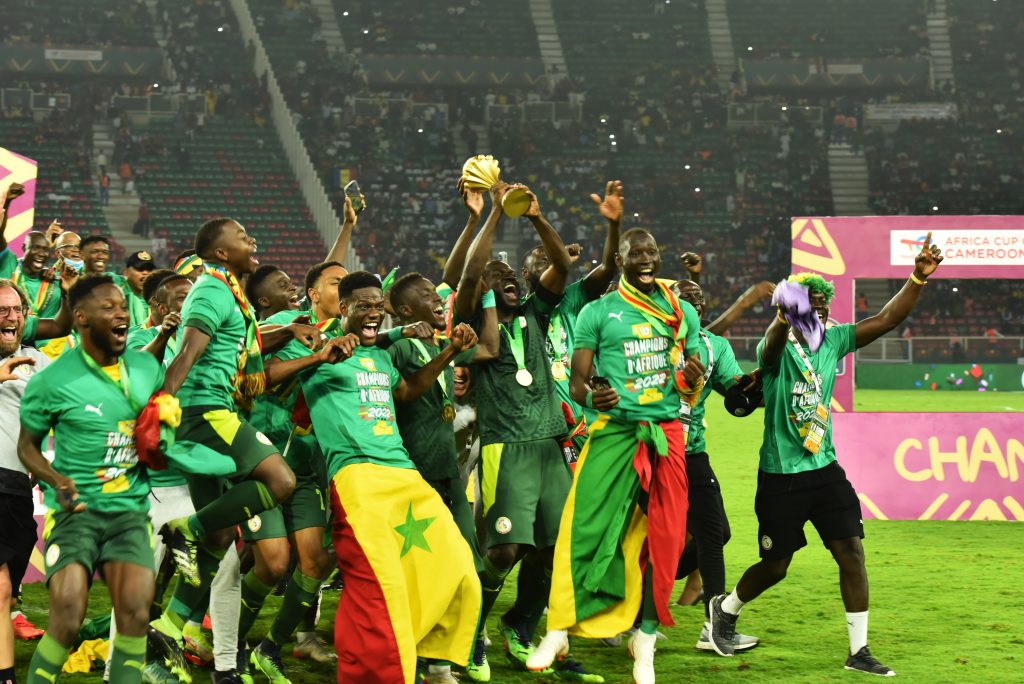
In the AFCON final against Morocco, Senegal’s aggressive pressing in extra time helped create counter-attacking opportunities. Pape Gueye drives forward from central midfield to score a superb effort as Senegal exploited space in transition.That winning goal didn’t come from individual brilliance. It came from a system functioning exactly as designed — midfield runners arriving late into space created by a structured press. That is a coached team, not a collection of individuals.
Under Thiaw, Senegal has mostly opted for a 4-3-3 formation however the flexibility between a 4-3-3 and 4-2-3-1 is seamless because the personnel permit it — Pape Gueye and Idrissa Gueye providing the defensive midfield base, with Sadio Mané, Iliman Ndiaye, and Ismaila Sarr as the attacking three in support of Nicolas Jackson.
Jackson himself is the player this squad is genuinely being built around. Tottenham’s Pape Matar Sarr, Everton’s Iliman Ndiaye and Bayern Munich’s Nicolas Jackson are all under-25 and provide a refreshing touch of youth to the squad.
Jackson, now at Bayern Munich after his formative years at Chelsea, is a centre-forward with genuine elite-level attributes — explosive, strong in the air, capable of holding the ball under pressure. This is a Jackson that challenges likely Ballon d’or winner Harry Kane in a Bayern team looking likely to win the Champions League. Ndiaye, behind Jackson in the Senegal set-up, currently playing at Everton, is doing the creative work that makes the whole system tick in the final third.
Idrissa Gueye made more tackles than any other Senegal player at the Africa Cup of Nations — and he is 36. That tells you something about the defensive mentality Pape Thiaw has embedded in this group. The young players have absorbed it.
The lack of a natural creative attacking midfielder remains a concern — the midfield has plenty of talent, but Pape Matar Sarr, Pape Gueye and Idrissa Gueye are all primarily defensive in their orientation. Ndiaye carries that creative burden almost alone, which is an ask. But in tournament football, one match-winner is often enough.
Verdict: Respect Is Long Overdue
Senegal World Cup 2026 should be treated as a genuine last-16 certainty and a credible quarterfinal candidate. The group requires navigating Norway, which is difficult but far from impossible. If you’re looking for value, their odds to qualify from Group I are likely shorter than they appear at first glance. Senegal is an experienced, physically imposing, tactically organised side that has won AFCON and beaten England in the past twelve months. That combination deserves respect, not asterisks.